Brand Strategy Keynote Template: Professional Design
Presenting a brand strategy to stakeholders, clients, or internal teams requires more than just solid data. It demands a visual narrative that communicates vision, market positioning, and creative direction in a way that is both clear and compelling. The Brand Strategy Keynote Template offers a structured yet flexible foundation for building exactly that kind of presentation. This template combines clean aesthetics with practical functionality, making it a valuable asset for anyone who needs to articulate brand thinking without getting lost in design busywork.
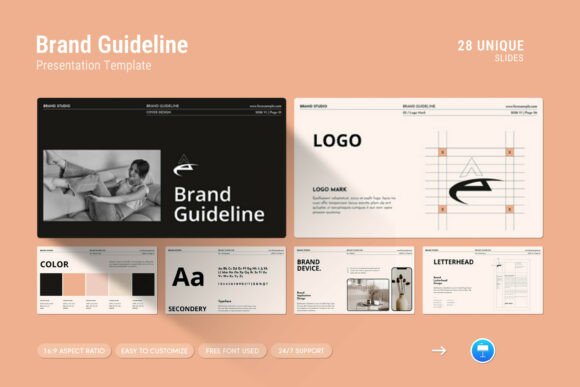
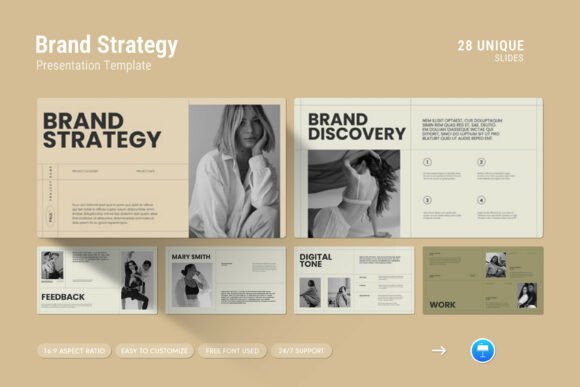
At its core, this template is a complete Keynote file containing 28 slides, each designed to support a professional brand strategy narrative. It works on both Apple and Windows platforms, uses a 16:9 Full HD ratio (1920x1080px), and relies on master slide layouts for consistency. The design philosophy leans toward simplicity and contemporary power, with room for creative photo layouts, infographics, tables, vector icons, and diagrams. It is not just about looking good — it is about helping you structure complex ideas into a format that resonates with your audience.
Why a Dedicated Brand Strategy Template Matters
A brand strategy presentation is different from a standard business update. It blends research, vision, personality, and actionable steps. Using a template built specifically for this purpose saves you from reinventing the layout wheel each time. The Brand Strategy Keynote Template provides a cohesive visual language from slide one through slide 28. This consistency helps your audience focus on your message instead of being distracted by mismatched visuals or cluttered slides.
Because the template includes master slides, you can maintain a uniform look across headings, body text, image placements, and data displays. This is especially useful when multiple people collaborate on the same deck. The drag-and-drop photo feature also means you do not need advanced design skills to swap in your images. You simply replace placeholder visuals with your own photography, product shots, or brand assets. The result is a polished, on-brand presentation that feels custom-made.
Creative Possibilities and Practical Applications
The versatility of this template opens up several creative directions depending on your specific needs. Below are practical ways different users can adapt the slides for their goals.
Brand Audits and Competitive Analysis
If you are presenting a brand audit, you can use the infographic and diagram slides to map competitor positioning, market gaps, and customer perceptions. The vector icons allow you to visualize different brand attributes without cluttering the slide with text. For example, you might create a two-axis chart showing where your brand sits relative to competitors on dimensions like price versus quality or heritage versus innovation. The clean design ensures that even complex comparisons remain easy to read.
For internal teams, this section can double as a diagnostic tool. Use the table slides to list brand touchpoints, score their current effectiveness, and prioritize areas for improvement. The structured layout helps you move from observation to recommendation without losing your audience in raw data.
Brand Identity and Visual Direction
When defining a brand’s visual identity, the creative photo layouts become especially useful. You can showcase mood boards, color palette explorations, typography pairings, and logo variations in a visually cohesive way. The template’s contemporary design supports a range of aesthetics — from minimal and corporate to bold and expressive. By grouping related visuals on a single slide using the included layout options, you tell a story about where the brand is heading visually.
This is also a good place to show before-and-after examples. Use one slide to present the current visual identity and the next to show the proposed evolution. The drag-and-drop feature makes it easy to swap in real client work or conceptual designs as you refine your direction.
Brand Positioning and Messaging Frameworks
The diagram slides are ideal for illustrating brand positioning models. You might create a brand pyramid showing purpose, vision, mission, values, and personality. Or you could use a Venn diagram to represent the intersection of audience needs, brand strengths, and market opportunities. The vector icons help label each element without adding heavy text blocks.
For messaging, consider using the table slides to map different audience segments to corresponding key messages, tone of voice guidelines, and channel preferences. This turns abstract strategy into a reference tool that teams can use long after the presentation ends. The clean layout keeps each segment distinct, reducing the risk of confusion during implementation.
Go-to-Market and Launch Strategies
If your brand strategy includes a product launch or market entry plan, the template’s timeline and workflow diagrams can help. Use the infographic slides to show phased rollouts, milestone dates, and responsible teams. The 16:9 format gives you enough horizontal space to display a six-month or twelve-month timeline without cramming.
You can also use the icon-based slides to highlight key campaign elements — awareness, engagement, conversion, retention — and connect them to specific brand messages. This bridges the gap between strategy and execution, showing stakeholders how the brand will come to life in the marketplace.
Adapting the Template for Different Audiences
Not every audience needs the same level of detail. The Brand Strategy Keynote Template allows you to tailor your presentation without starting from scratch.
- For executives and decision-makers: Focus on the high-level vision slides, positioning diagrams, and key metrics. Use the infographic slides to summarize market opportunity and projected impact. Keep the photo layouts polished but minimal — too many images can distract from the strategic narrative. Use strong, direct language in headings and let the visual hierarchy guide attention.
- For creative teams and agencies: Expand the visual direction slides. Use more photo layouts to show campaign concepts, design explorations, and brand expression examples. The template’s contemporary style aligns well with creative work, so you can lean into the aesthetic flexibility. Consider using the vector icons to tag each concept with a strategic rationale — this helps creatives understand the “why” behind the visuals.
- For small business owners and entrepreneurs: Strip away any slides that feel too corporate and focus on the core brand story. Use the table slides to define your brand’s personality traits, target audience, and unique value proposition. The drag-and-drop imagery makes it easy to include your own product photos or team shots, adding authenticity. Keep the overall deck short — 10 to 15 slides — and use the master slides to ensure a consistent, professional look even if you are not a designer.
- For educators and workshop facilitators: Use the diagram and infographic slides to explain brand strategy concepts in a teaching context. The vector icons can represent different brand components, making abstract ideas more concrete. You might create a slide that walks through the brand strategy process step by step, using arrows and icons to show the progression from research to implementation. The clean design helps students or participants focus on the framework rather than decorative elements.
Practical Recommendations for Getting the Most Out of the Template
To keep your presentation clear, effective, and audience-friendly, consider these practical approaches when working with the template.
Maintain Visual Consistency
Even though the template includes diverse slide types, consistency in color, font, and image style matters. Choose a color palette that reflects your brand or your client’s brand and apply it across all slides. The template’s easy color change feature lets you update the entire deck in one go if you use master slides correctly. Stick to one or two font families — one for headings and one for body text — and avoid mixing too many visual styles within a single slide deck.
Use Images with Intent
The creative photo layouts are a strong feature, but each image should serve a purpose. Avoid using decorative stock photos that add no meaning. Instead, choose images that reinforce your strategy — a photo of the target audience using the product, a visual metaphor for the brand’s core value, or a behind-the-scenes shot that shows company culture. The drag-and-drop functionality makes it easy to experiment with different images until you find the right fit.
Structure Your Narrative Before You Design
Begin with an outline of your brand strategy story. Decide the key points you want to cover — market context, brand purpose, target audience, positioning, visual identity, activation plan, and measurement. Then map each point to the slide type that best communicates it. The template gives you 28 slides, but you do not have to use them all. Fewer slides with stronger content always outperform a longer deck with diluted messages.
Balance Data and Storytelling
Infographics and tables are excellent for presenting data, but they should support your narrative, not replace it. Use the infographic slides to highlight key statistics or trends that justify your strategic choices. Use the table slides to organize information that the audience needs to reference later. Keep text minimal on data-heavy slides — let the visuals do the heavy lifting. If you include a diagram, label it clearly so the audience understands the logic at a glance.
A Template That Supports Real Work
The Brand Strategy Keynote Template is not about flashy effects or unnecessary complexity. It is a practical tool designed to help you present brand strategy in a way that is professional, organized, and visually coherent. Whether you are a freelancer pitching to a startup, a marketing lead aligning your team, or an agency presenting to a long-standing client, this template gives you a solid starting point. The 28 slides cover enough ground to build a complete narrative, while the master slides and easy editing features ensure you can adapt the deck to your specific context without hours of manual adjustments.
Because the template includes free fonts and a help file, you can start working immediately without hunting for additional resources. The support team is also available if you need assistance, which adds peace of mind especially when you are working under a tight deadline. In a field where first impressions matter, having a presentation that looks intentional and well-crafted can make the difference between securing buy-in or losing attention. This template helps you tip the scale in your favor.