Brand Strategy Google Slides Template: A Practical Guide to Polished Presentations
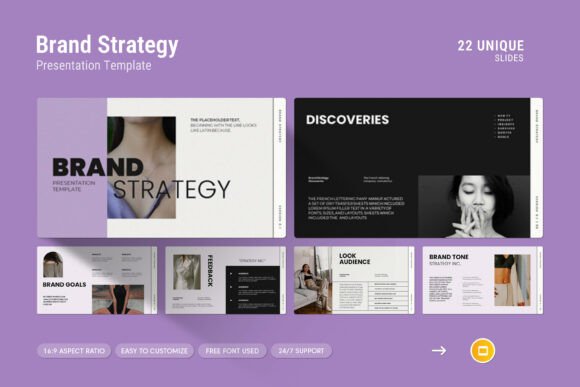
Presenting a brand strategy requires clarity, structure, and visual appeal. Whether you are pitching to stakeholders, aligning a team, or presenting research findings, the way you communicate your strategy matters as much as the content itself. The Brand Strategy Google Slides Template is designed to help you present your work in a professional and clean way, without the friction of starting from scratch or wrestling with complex design tools. It is a simple, contemporary yet powerful design that includes creative photo layouts, infographics, tables, vector icons, diagrams, and a range of features to elevate your company profile and strategic work.
This article explores how this template fits into real workflows, how it interacts with other tools and methods, and how you can integrate it smoothly into your own presentation process. Whether you are a marketer, entrepreneur, educator, freelancer, or small business owner, the insights here will help you use the template effectively from preparation to final delivery.
What the Template Offers and Where It Fits
The template is delivered as a Google Slides .PPTX file, which also includes a help file and support from the designer. It contains 22 slides in total, each built on master slide layouts for consistency. The 16:9 full HD ratio (1920x1080px) ensures your presentations look crisp on modern screens, projectors, and video calls. The design works on both Apple and Windows platforms, so compatibility is not a concern.
Key features include drag-and-drop image replacement, easy color change, and full editability. The template uses free fonts, so you do not need to purchase additional licenses. The included vector icons, infographics, tables, and diagrams are ready to be customized to reflect your specific data and messaging.
Where does this template fit in a broader process? It serves as the structural backbone for any presentation where brand strategy is the focus. This includes internal alignment meetings, client pitches, conference talks, workshop materials, and educational content. It can be used before a project to outline a strategy, during a project to track progress, or after a project to present results. The template is equally relevant for creative processes, business workflows, learning activities, and personal branding efforts.
Integrating the Template into Your Workflow
To get the most out of the Brand Strategy Google Slides Template, it helps to think about how it interacts with your existing tools, methods, and assets. Here are several practical ways to integrate it smoothly.
Preparation and Content Planning
Before you open the template, gather your raw materials. This might include brand audit results, market research, competitor analysis, customer personas, mission and vision statements, value propositions, and strategic objectives. Having this content ready makes the drag-and-drop and customization process much faster.
The template's infographics and diagrams are ideal for visualizing data such as market positioning, customer journey maps, or SWOT analyses. You can use the tables to compare competitors or outline timelines. The vector icons help reinforce concepts without cluttering slides with text. By preparing your content in advance, you reduce the temptation to over-design slides and stay focused on the message.
Customizing the Design System
One of the template's strongest features is easy color change. Before you start building slides, set your brand colors. This ensures that every element—from charts to icons to backgrounds—aligns with your visual identity. The master slide layout approach means changes you make to the parent slide propagate to all child slides automatically, saving hours of manual adjustments.
Similarly, choose your free font combination early. The template uses free fonts, so you can download and install them before you begin editing. This avoids last-minute formatting issues and ensures your presentation looks consistent across devices.
Drag-and-drop image replacement is straightforward. Use high-quality, on-brand photos that reinforce your message. Avoid generic stock imagery when possible; real photos of your team, product, or customers add authenticity and support the E-E-A-T principles that build trust with your audience.
Building the Slide Deck
With 22 slides at your disposal, you can structure a comprehensive narrative. Here is a typical flow for a brand strategy presentation using the template:
- Title slide with your company name and tagline
- Agenda or overview slide to set expectations
- Company profile and mission
- Market context and competitive landscape (use tables and diagrams)
- Target audience and personas (use infographics)
- Brand positioning and value proposition
- Key strategic initiatives and priorities
- Implementation roadmap or timeline (use diagrams)
- Measurement and KPIs (use tables and charts)
- Closing slide with call to action
This structure is not rigid. You can reorder slides, duplicate those you need more of, and delete those that are not relevant. The template is fully editable, so you have complete control over the flow.
Collaboration and Feedback
Google Slides is inherently collaborative. Share the file with team members, stakeholders, or clients and collect feedback in real time. Because the template is based on master slides, comments and suggestions stay within a consistent design framework. This reduces the back-and-forth about formatting and lets people focus on content.
If you use other tools such as Google Docs for research notes, spreadsheets for data, or project management platforms like Trello or Asana, you can embed or link relevant information directly into the slides. The template's clean layouts accommodate embedded charts or screenshots without looking cluttered.
Practical Implementation Tips
To make the most of the template, keep these points in mind:
- Start with the flow, not the design. Plan your narrative arc before applying visual polish. The template's structure supports clear storytelling if you let the content drive the layout.
- Use infographics sparingly. One strong visual per slide is more effective than multiple competing graphics. The template includes many infographic options, but choose only those that directly support your point.
- Maintain consistency. The master slides ensure consistent typography, colors, and spacing. Trust the design system rather than overriding it with manual adjustments.
- Test on your output device. Whether you present on a laptop, projector, or via screen share, check that all elements appear correctly. The 1920x1080 resolution covers most scenarios, but it is always wise to preview.
- Keep file size manageable. If you use high-resolution images, compress them before inserting. This keeps the slides responsive and reduces loading time during presentations.
Quality Control and Long-Term Use
Before you present, review each slide for alignment, color accuracy, and readability. The template's vector icons and diagrams will scale without pixelation, but text boxes should be checked for overflow. Print a handout version if needed, and ensure that tables and charts are legible in grayscale.
For long-term use, save your customized version as a template. This way, every time you need to present a brand strategy update, you start from a familiar, on-brand base. The help file included with the template is useful for troubleshooting, and the free real support from the designer means you have a resource if you encounter issues.
Use Cases Across Different Roles
The Brand Strategy Google Slides Template is versatile enough for different professionals and scenarios:
- Marketers can use it to present annual brand plans, campaign strategies, or competitive analyses. The infographics help simplify complex data for executive audiences.
- Entrepreneurs and small business owners can pitch their brand vision to investors or partners. The clean, contemporary design conveys professionalism without requiring a design background.
- Educators and bloggers can repurpose the template for teaching brand strategy concepts. The diagrams and tables serve as clear visual aids for students or readers.
- Freelancers and consultants can use the template as a reusable asset for multiple clients. By saving a master copy, you can duplicate and customize for each engagement, maintaining consistency across your portfolio.
- Productivity-minded users appreciate the drag-and-drop simplicity and the master slide logic, which reduces repetitive formatting tasks.
Why This Template Works in Real Workflows
The template is not just a set of pretty slides; it is a system. The master slides enforce consistency, the drag-and-drop image replacement saves time, and the easy color change aligns with brand guidelines effortlessly. The 22-slide count is enough to cover a comprehensive strategy without being overwhelming. The vector icons and infographics are practical tools for visual communication, not decorative extras.
Because it works on both Apple and Windows, and it is delivered as a Google Slides file, you can access and edit it from almost any device. The free font requirement means no additional costs, and the included help file and designer support reduce the learning curve.
When you integrate this template into your workflow, you reduce the friction between having a great strategy and presenting it effectively. You spend less time on layout and more time on content. You produce a consistent, professional output that reflects your brand accurately. And because the template is fully editable, you can adapt it as your strategy evolves, making it a long-term asset rather than a one-time tool.
Final Considerations
Presenting a brand strategy is about clarity and trust. Your audience—whether internal teams, clients, or investors—needs to understand your reasoning, your vision, and your plan. The Brand Strategy Google Slides Template supports that goal by providing a clean, structured, and visually consistent framework. It does not replace the thinking behind your strategy, but it ensures that your thinking is presented in the best possible light.
Take the time to prepare your content, customize the design system, and practice your delivery. The template handles the visual heavy lifting, so you can focus on what matters most: communicating your brand strategy with confidence.